
Table of Contents
- What Regenerative Medicine for Sports Injuries Actually Does
- Types of Regenerative Therapies: PRP, Stem Cells, and More
- Common Sports Injuries Treated with Regenerative Medicine
- Stem Cell Therapy Recovery Time: What to Expect
- Who Is a Good Candidate, and Who Should Wait
- Insurance Coverage and Financial Planning for Regenerative Care
- Frequently Asked Questions
Last Updated: September 1, 2026
What Regenerative Medicine for Sports Injuries Actually Does
Regenerative medicine for sports injuries uses the body’s own biological materials to repair damaged tissue, reduce inflammation, and restore function without conventional surgery. Rather than masking pain with medication or removing damaged structures, these therapies amplify the body’s natural healing cascade at the cellular level.
At The Dynamic Care Clinic, led by Dr. Ludwig Mantay, we offer a compassionate and professional approach to personalized primary care, blending traditional medicine with advanced regenerative treatments such as stem cells, exosomes, and hormone therapy to support your body’s natural healing processes. We empower individuals of all ages to restore function and vitality, focusing on long-term wellness and renewed balance rather than temporary symptom management.
The musculoskeletal system has limited capacity to heal on its own. Tendons, cartilage, and ligaments receive relatively little blood flow compared to muscle tissue, making them slow to repair and prone to chronic degeneration. Regenerative therapies introduce concentrated growth factors, cellular signals, or living cells directly into the injured site to accelerate repair.
As noted by the National Institutes of Health in its orthobiologics and tissue repair resources, the science of biological healing has advanced significantly over the past two decades, with clinical trials now supporting specific applications for musculoskeletal conditions. The practical result for patients is faster recovery, preserved joint function, and in many cases, a genuine alternative to orthopedic surgery.
Types of Regenerative Therapies: PRP, Stem Cells, and More
Not all regenerative therapies work the same way. Understanding the differences matters for setting realistic expectations and choosing the right option for a specific injury.
PRP Therapy for Sports Injuries
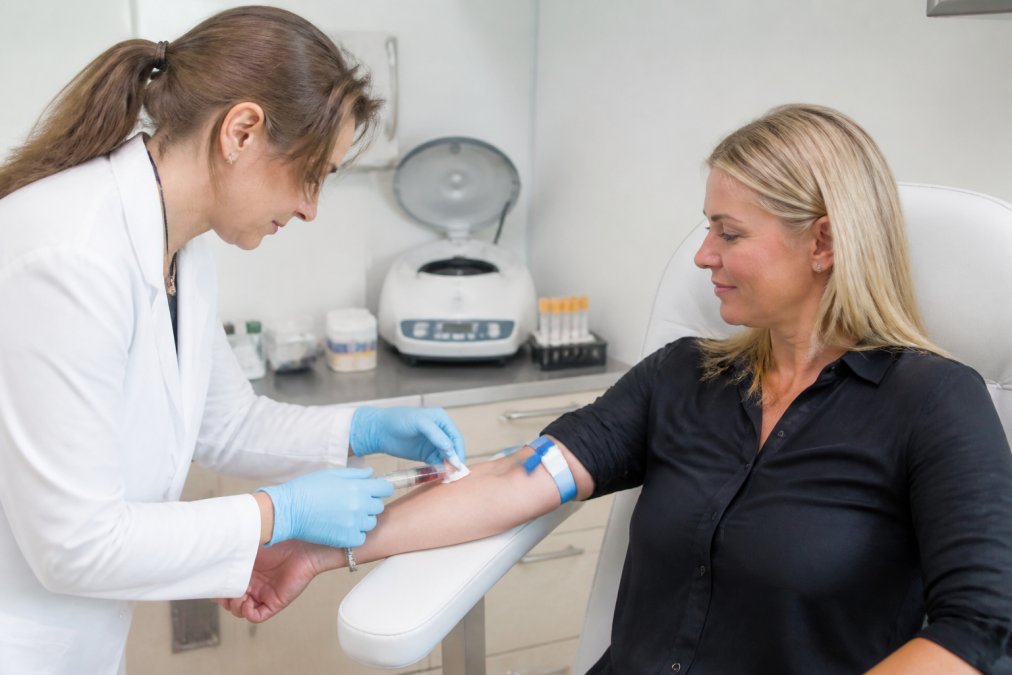
Platelet-rich plasma (PRP) therapy is a biologic injection made from the patient’s own blood. A small blood draw is centrifuged to concentrate platelets, which are then injected into the injury site. Platelets carry growth factors that signal tissue repair and modulate the inflammatory response.
PRP therapy is among the most studied orthobiologic treatments available. It is commonly used for tendinopathy, ligament sprains, and partial-thickness rotator cuff tears. The autologous nature of PRP makes it a low-risk option with a well-established safety profile. Treatment typically takes under an hour, and most patients return to light activity within a few days.
|
Treatment |
Source |
Primary Use Case |
Invasiveness |
|---|---|---|---|
|
PRP |
Patient’s blood |
Tendinopathy, ligament injuries |
Minimally invasive injection |
|
Bone Marrow Aspirate |
Patient’s bone marrow |
Cartilage repair, joint preservation |
Minimally invasive aspiration |
|
Adipose-Derived Cells |
Patient’s fat tissue |
Joint degeneration, soft tissue |
Minimally invasive harvest |
|
Exosomes |
Lab-processed cell signals |
Broad tissue regeneration |
Injection |
|
Prolotherapy |
Dextrose solution |
Ligamentous laxity, chronic sprains |
Injection series |
Stem Cell and Bone Marrow Aspirate Therapies
Mesenchymal stem cells are the workhorse of cellular therapy in orthopedics. These patient-derived cells can differentiate into bone, cartilage, and connective tissue, making them particularly valuable for cartilage repair and joint preservation.
Bone marrow aspirate concentrate (BMAC) is the most common delivery method. Marrow is drawn from the iliac crest of the pelvis, processed to concentrate the stem cell population, and injected into the target joint or tissue. Adipose-derived stem cells, harvested from fat tissue, are another autologous source used in certain protocols.
According to peer-reviewed orthobiologics research published on PubMed, clinical trials show functional improvement in patients with knee osteoarthritis and rotator cuff pathology following stem cell-based interventions. Results vary by injury type, patient age, and overall health status. The concentration, processing method, and injection technique differ significantly across providers, which is why clinical experience matters.
Exosomes and Emerging Orthobiologics
Exosomes represent the frontier of regenerative medicine. These extracellular vesicles deliver cellular signals, proteins, and messenger RNA that direct cell behavior and tissue repair without introducing living cells directly.
Rather than delivering cells that may not engraft into damaged tissue, exosomes deliver the signaling molecules that tell existing cells to regenerate. Early clinical data is promising, particularly for cartilage repair and nerve tissue, though the evidence base is less mature than for PRP or BMAC.
Prolotherapy uses injections of dextrose solution to stimulate a localized healing response in areas of ligamentous laxity or chronic soft tissue injury. It remains a cost-effective option for specific presentations.
For Appointments Call: 253-509-0424 →
Common Sports Injuries Treated with Regenerative Medicine
Regenerative medicine addresses a wide spectrum of sports-related musculoskeletal injuries, particularly those that have not responded to conventional care.
The injuries most commonly treated include:
- Rotator cuff tears (partial thickness): PRP and BMAC injections promote tissue repair and reduce inflammatory load
- Meniscal injuries: Biologic injections support cartilage repair and may delay or prevent surgical intervention
- Patellar tendinitis: Chronic tendinopathy responds well to PRP, with many patients reporting meaningful functional improvement
- Tendinopathy of the Achilles, elbow, and shoulder: Growth factors help reverse the degenerative environment created by repeated micro-trauma
- Ligament sprains and ligamentous laxity: Prolotherapy and PRP address chronic instability following incomplete ligament healing
- Hip and knee osteoarthritis: Mesenchymal stem cells and PRP are used for joint preservation in patients seeking to delay joint replacement
Chronic injuries do respond to biological healing, and tissue that has been degenerating for years can still benefit from the right cellular signals. The key variable is the extent of structural damage and the patient’s overall biological capacity to heal.
Stem Cell Therapy Recovery Time: What to Expect
Stem cell therapy recovery time is shorter than that of surgery but longer than that of a cortisone injection. Most patients experience mild soreness or swelling at the injection site for three to seven days, reflecting activation of the inflammatory phase of the healing cascade.

Light activity is typically possible within a week. Return to sport or high-load activity generally follows a graduated timeline over four to twelve weeks, depending on the injury treated and the specific protocol used.
Post-Treatment Rehabilitation Protocols
Regenerative injections initiate a biological process that needs the right mechanical environment to produce good tissue. Rehabilitation protocols after regenerative treatment are not optional add-ons; they are a core part of achieving functional outcomes.
A well-designed post-treatment protocol typically includes:
- Relative rest (days 1-7): Avoid high-impact loading and anti-inflammatory medications, which can blunt the healing response
- Gentle range-of-motion work (week 2): Controlled movement maintains joint mobility and promotes organized tissue remodeling
- Progressive loading (weeks 3-8): Graduated resistance exercise directs newly forming tissue to align with functional demands
- Sport-specific conditioning (weeks 8-12+): Return-to-sport activities are introduced incrementally
Patients who follow a structured rehabilitation protocol consistently report better functional outcomes than those who treat the injection as a standalone fix.
Who Is a Good Candidate, and Who Should Wait
Regenerative medicine is not the right fit for every patient, and a thorough evaluation of candidacy is one of the most important steps in the process.
For Appointments Call: 253-509-0424 →
Good candidates generally include:
- Patients with partial-thickness tendon or ligament tears who have not responded to physical therapy alone
- Individuals with early-to-moderate joint degeneration seeking to preserve function and delay surgical intervention
- Athletes with chronic tendinopathy that has plateaued with conventional management
- Patients who are medically unsuitable for surgery or wish to exhaust non-surgical options first
Patients who should wait or seek further evaluation:
- Those with complete tendon or ligament ruptures that require surgical reconstruction
- Individuals with active infection at or near the treatment site
- Patients with certain blood disorders or active malignancy, where the use of autologous biologics requires careful clinical judgment
- Anyone with severe end-stage joint destruction, where structural damage exceeds what biological repair can address
Age is not a disqualifying factor on its own. Many patients in their fifties, sixties, and beyond respond well to regenerative therapies when the clinical picture is appropriate. The most important variable is an honest, thorough assessment.
Insurance Coverage and Financial Planning for Regenerative Care
Most regenerative medicine treatments, including PRP and stem cell injections, are not covered by standard health insurance plans. Insurance coverage generally follows FDA approval for specific indications. Because many regenerative treatments are still accumulating the clinical trial data needed for formal approval, they are classified as experimental or investigational by most payers.
However, a single regenerative treatment often costs less than a surgical procedure when you factor in hospital fees, anesthesia, and extended recovery time. For patients facing joint replacement or rotator cuff surgery, the comparison is worth making carefully.
Practical steps for financial planning:
- Ask your provider for an itemized estimate before committing to a treatment plan
- Check whether your Health Savings Account (HSA) or Flexible Spending Account (FSA) can be used; many regenerative procedures qualify as medical expenses
- Ask whether payment plans are available
- Request documentation of your diagnosis and treatment rationale, which may support a future insurance appeal
Chronic sports injuries and musculoskeletal pain deserve more than a prescription and a referral. The Dynamic Care Clinic offers personalized regenerative care plans built around your specific injury history, health goals, and biological profile, combining the expertise of Dr. Les Griffith and Dr. Ludwig Mantay with a patient-centered approach that takes your full health history seriously. To explore whether PRP, stem cell therapy, or exosome treatment is right for you, call The Dynamic Care Clinic at 253-509-0424 to schedule a consultation.
Frequently Asked Questions
Are regenerative medicine treatments for sports injuries FDA-approved?
Most regenerative medicine treatments, including PRP and many stem cell therapies, are not FDA-approved as finished drug products. The FDA regulates these as biologics or human cells and tissues. Some autologous procedures fall under enforcement discretion, while others require an Investigational New Drug application. Patients should ask their provider directly about the regulatory status of any specific treatment being offered, and review the FDA’s guidance on human cells, tissues, and cellular products (HCT/Ps) before proceeding.
Will insurance pay for regenerative medicine for sports injuries?
Most health insurance plans, including Medicare and Medicaid, currently classify PRP, stem cell therapy, and similar orthobiologics as experimental or investigational for musculoskeletal conditions. That means the majority of patients pay out of pocket. Coverage can vary by insurer and specific diagnosis, so it is worth calling your plan directly. Some clinics offer financing options. Contact a provider like The Dynamic Care Clinic at 253-509-0424 to discuss what your treatment plan might involve financially.
How long does it take to see results from stem cell therapy for a sports injury?
Stem cell therapy recovery time varies by injury type, severity, and the patient’s overall health. Many patients notice gradual improvement over six to twelve weeks as tissue regeneration progresses. Full functional outcomes for conditions like rotator cuff tears or meniscal injuries can take three to six months. Unlike surgery, there is typically minimal downtime immediately after the injection, but a structured rehabilitation protocol is essential to support the healing cascade and protect the treated tissue during recovery.
How does regenerative medicine differ from traditional orthopedic surgery?
Orthopedic surgery physically repairs or removes damaged tissue. Regenerative medicine takes a different approach: biologic injections like PRP or mesenchymal stem cells introduce growth factors and cellular signals that encourage the body’s own tissue to rebuild. This makes it minimally invasive, with no general anesthesia, no surgical incisions, and significantly less downtime. It is best suited to patients with moderate injury severity. Advanced structural damage may still require surgical intervention, sometimes alongside regenerative support.
What is the biggest limitation of regenerative medicine right now?
The most significant limitation is the current state of clinical evidence. While many patients report meaningful improvement, large-scale randomized controlled trials are still underway for most orthobiologic treatments. Therapeutic efficacy can vary based on the patient’s age, the chronicity of the injury, and the specific preparation used. This evidence gap also explains why most insurers do not yet cover these therapies. Choosing a provider who reviews your full health history and sets realistic expectations is essential before committing to treatment.
Can regenerative medicine help chronic tendonitis or long-standing injuries?
Chronic tendinopathy and long-standing ligamentous laxity are among the most common reasons patients seek regenerative care. PRP therapy for sports injuries, in particular, has been studied for conditions like patellar tendinitis and rotator cuff tendinopathy, with many patients experiencing reduced pain and improved function. Results depend on how much structural integrity remains in the tissue. A thorough evaluation, including imaging, helps determine whether biological healing is still achievable or whether other interventions are more appropriate.
Recent Comments