
Table of Contents
- How These Longevity Clinics Compare: A Quick Overview
- Angell Longevity: Regenerative Medicine and mRNA Delivery
- GARM Clinic: Medical Tourism and Cellular Rejuvenation
- Risk Profile, Contraindications, and Long-Term Outcomes
- Personalized Primary Care vs Longevity Clinics: Key Differences
- Which Approach Fits Your Health Goals?
- Frequently Asked Questions
Last Updated: September 2, 2026
How These Longevity Clinics Compare: A Quick Overview
Regenerative medicine has moved from the fringes of healthcare into serious clinical conversation. The comparison of Angell Longevity vs GARM Clinic comes up often, and for good reason: both represent distinct philosophies about extending healthspan and supporting cellular rejuvenation. At The Dynamic Care Clinic, we work with patients who have researched both options extensively and still feel uncertain about which direction makes sense for their health goals.
This guide offers an objective look at what each clinic represents, where the real risks lie, and why personalized primary care with integrated regenerative medicine often delivers better long-term outcomes for patients in the United States.
|
Clinic / Provider |
Primary Approach |
Location |
Key Treatments |
Best For |
|---|---|---|---|---|
|
Angell Longevity |
mRNA delivery, gene therapy |
Domestic |
Stem cell therapy, Klotho protocols, lipid nanoparticle delivery |
Biohacking-oriented patients seeking experimental treatments |
|
GARM Clinic |
Medical tourism, cellular rejuvenation |
Abroad |
Stem cell infusions, exosome therapy |
Patients seeking lower-cost regenerative care outside the US |
|
The Dynamic Regenerative Care Clinic |
Personalized primary care + regenerative medicine |
Domestic |
Stem cells, exosomes, peptides, bio-identical hormones, PRP |
Patients seeking integrated, physician-led care with clinical oversight |
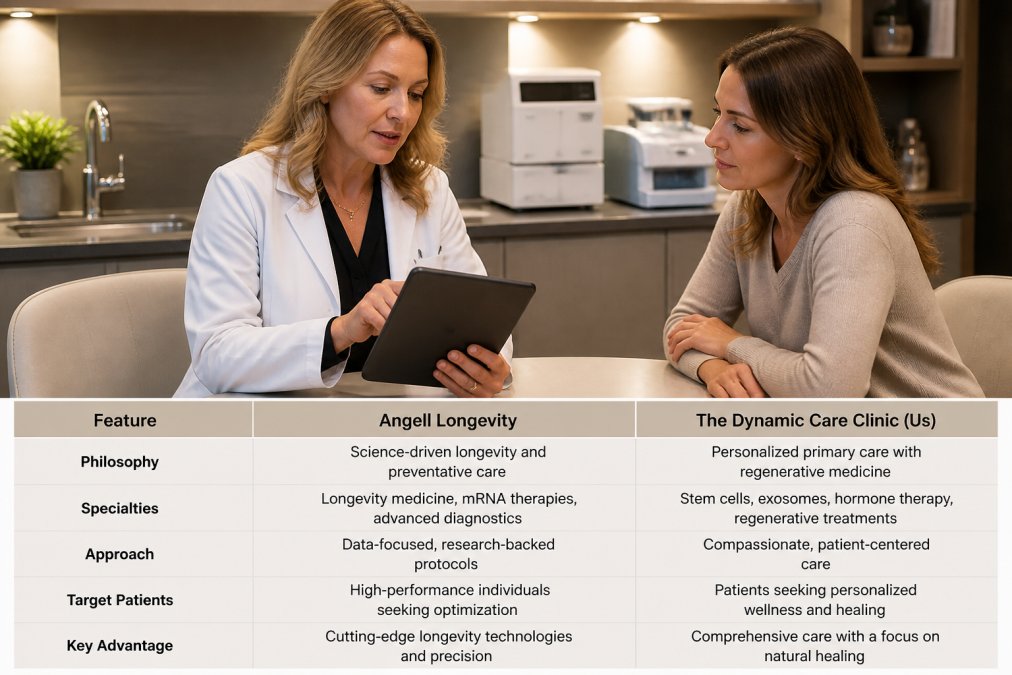
Angell Longevity and GARM Clinic occupy opposite ends of the access spectrum: one pushes experimental biotechnology domestically, the other moves treatment offshore to reduce costs. The Dynamic Care Clinic sits in a different category, combining the continuity of primary care with regenerative medicine science.
Angell Longevity: Regenerative Medicine and mRNA Delivery
Angell Longevity positions itself at the experimental edge of regenerative medicine, focusing on mRNA-based delivery systems and gene therapy designed to influence circulating protein levels and slow cellular senescence. The clinic’s protocols draw on research into proteins like Klotho, which has attracted attention in longevity science for its association with cognitive function and metabolic health.
The appeal is real for patients who have exhausted conventional options. But the appeal and the evidence base are two different things.
Stem Cell Therapy and Gene Therapy Platforms
Stem cell therapy typically involves harvesting cells, processing them, and reintroducing them to promote tissue repair and reduce inflammation. Gene therapy goes further, attempting to modify cellular behavior using vectors, sometimes lipid nanoparticles, to deliver genetic instructions.
Stem cell therapy has a longer track record in clinical settings, with applications in orthopedics, autoimmune conditions, and neurological support. Gene therapy, particularly mRNA-based approaches outside vaccine contexts, remains largely in early-phase clinical trials for most longevity applications. According to the National Institutes of Health’s gene therapy information resource, most gene therapy protocols are still investigational, evaluated under research conditions rather than as standard-of-care treatments.
Patients should understand the distinction between clinical trial participation, which includes formal monitoring and safety protocols, and direct-to-consumer experimental treatments, which may not carry the same oversight.
Patient Eligibility and Screening Process
A rigorous patient eligibility and screening process is one of the most important markers of a credible regenerative medicine provider. Before any stem cell or gene therapy intervention, responsible clinical oversight requires a thorough review of medical history, current medications, immune status, and contraindications.
Common screening criteria include:
- Active malignancy or history of certain cancers
- Uncontrolled autoimmune conditions
- Cardiovascular instability or recent cardiac events
- Current use of immunosuppressants
- Pregnancy or breastfeeding
Clinics that minimize screening in favor of faster enrollment represent a meaningful risk. Patients should ask direct questions about what the screening protocol includes and what conditions would disqualify them from treatment.
GARM Clinic: Medical Tourism and Cellular Rejuvenation
GARM Clinic operates as a medical tourism destination, offering stem cell infusions and exosome therapy to patients who travel abroad for care. The model is built on cost-benefit: access to regenerative treatments at significantly lower price points than domestic alternatives, without the regulatory constraints that govern US-based providers.
The medical tourism market for regenerative care has grown considerably, and GARM Clinic has become frequently discussed in the Angell Longevity vs GARM Clinic conversation. The draw is understandable: patients who cannot access insurance coverage for experimental treatments domestically see international clinics as a practical workaround.
For Appointments Call: 253-509-0424 →
Safety Protocols and Clinical Oversight Abroad
Medical tourism for regenerative treatments introduces specific risks that patients often underestimate. Regulatory frameworks governing stem cell therapy vary dramatically by country. The FDA’s guidance on human cells, tissues, and cellular products establishes clear standards for domestic providers. Those standards do not follow you abroad. A clinic operating outside US jurisdiction is not subject to FDA oversight, and quality control standards for cell sourcing, processing, and storage may differ substantially from expectations.
Practical safety concerns include:
- Cell product quality and sterility cannot be independently verified
- Follow-up care after returning home may fall to a domestic physician uninvolved in the original treatment
- Adverse events may be difficult to attribute without access to the treating clinic’s records
- Travel introduces physiological stress that can affect treatment outcomes
Patients need to ask harder questions and accept that the safety net is thinner abroad.
Cost-Benefit Analysis of Medical Tourism for Regenerative Care
The lower upfront cost is real. What patients often fail to account for is the total cost, including travel, accommodation, time away from work, and potential complications or follow-up care domestically.
Continuity of care matters in regenerative medicine. A provider who knows your full health history, monitors your biomarkers over time, and adjusts protocols based on your response delivers something fundamentally different from a single-visit intervention abroad.
Risk Profile, Contraindications, and Long-Term Outcomes
The risk profile of regenerative treatments depends on the specific intervention, the patient’s baseline health, the clinical facility’s quality, and the rigor of post-treatment monitoring. Neither clinic operates within the kind of longitudinal outcomes tracking that would allow meaningful conclusions about long-term therapeutic efficacy.
Contraindications to stem cell therapy and mRNA-based treatments include active infection, certain autoimmune conditions in acute flare, coagulation disorders, and some histories of malignancy. Many patients seeking regenerative care have complex health profiles requiring careful evaluation before any intervention.
Long-term longitudinal outcomes for most experimental longevity treatments remain limited. According to the National Library of Medicine’s clinical trials database, the majority of registered trials for stem cell applications in longevity contexts are still in Phase 1 or Phase 2, primarily evaluating safety rather than long-term efficacy.
Patients should approach claims about biological age reversal and cellular rejuvenation with calibrated expectations. These are promising areas of biotechnology, not yet areas of established, reproducible clinical outcomes for most longevity applications.
Personalized Primary Care vs Longevity Clinics: Key Differences
Personalized primary care and longevity clinics serve overlapping goals through fundamentally different structures.
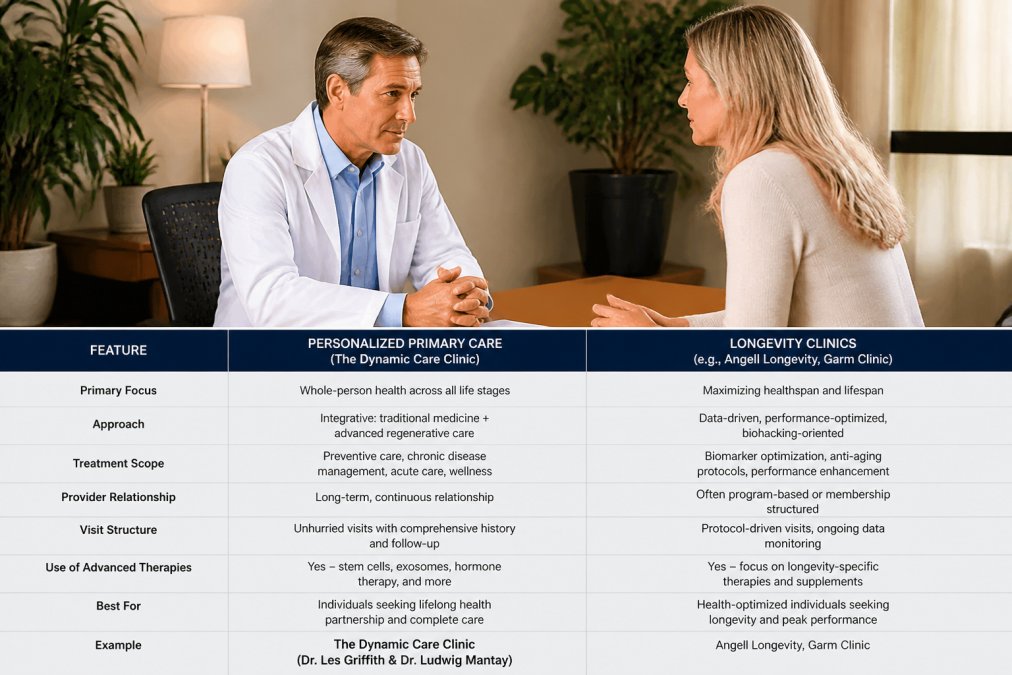
A longevity clinic typically offers a defined menu of interventions centered on advanced diagnostics and experimental treatments, such as stem cell infusions or gene therapy. The relationship is often episodic: patients receive treatment and return for scheduled follow-up.
Personalized primary care, as practiced at The Dynamic Care Clinic, operates differently. The relationship is continuous. Dr. Ludwig Mantay builds care plans around each patient’s complete health history, not a standardized longevity protocol. Regenerative treatments are integrated into that ongoing relationship rather than administered as standalone interventions.
For Appointments Call: 253-509-0424 →
|
Feature |
Longevity Clinic Model |
Personalized Primary Care |
|---|---|---|
|
Care relationship |
Episodic, protocol-driven |
Continuous, relationship-based |
|
Treatment approach |
Standardized longevity protocols |
Individualized plans based on full history |
|
Regenerative medicine |
Central offering |
Integrated with primary care |
|
Regulatory oversight |
Varies widely |
Domestic clinical standards |
|
Follow-up monitoring |
Scheduled intervals |
Ongoing, adaptive |
|
Best for |
Biohacking-oriented patients |
Chronic conditions, hormonal health, whole-person care |
If your goal is a single intervention to optimize a specific biomarker, a longevity clinic may suffice. If you have a complex health history or have felt dismissed by conventional medicine, the continuity of personalized primary care is likely to serve you better.
Which Approach Fits Your Health Goals?
The Angell Longevity vs GARM Clinic question is really a proxy for a deeper question: what kind of care relationship do you need, and what level of experimental risk are you comfortable with?
Patients who are generally healthy and primarily interested in preventative medicine may find value in experimental longevity clinics. They should go in with clear eyes about the evidence base and regulatory status of treatments.
Patients managing chronic autoimmune conditions, hormonal imbalances, persistent pain, or complex health histories are better served by a provider who can hold the whole picture. Regenerative medicine is most effective when delivered within a framework of personalized medicine.
Before making a decision, consider:
- Does the provider have a clear patient screening protocol?
- What does post-treatment monitoring look like, and who manages it?
- Is the treatment offered under an FDA-approved pathway, an IND, or outside regulatory oversight?
- If you experience an adverse event, who is responsible for your care?
- Does the provider’s approach address root causes, or focus on a single intervention?
The answers reveal more about a clinic’s quality than any marketing claim.
The Dynamic Care Clinic is led by Dr. Les Griffith, Professor Emeritus and co-founder of Bastyr University (in memorium), and Dr. Ludwig Mantay, ND, MPH. For appointments, call 253-509-0424.
Managing chronic conditions, navigating hormonal changes, or recovering from long-standing injuries is hard without evaluating experimental clinics in regulatory gray areas. The Dynamic Care Clinic offers a different path: personalized primary care that integrates regenerative treatments, including stem cells, exosomes, and bio-identical hormones, within a continuous, physician-led relationship. Dr. Ludwig Mantay builds care plans around your full health history, not a standardized protocol. Get started with The Dynamic Care Clinic and experience care that takes the whole picture seriously.
Frequently Asked Questions
What should patients look for when evaluating longevity and stem cell treatment centers?
Look for clinics that conduct thorough patient screening before recommending any treatment, maintain transparent safety protocols, and operate under clear regulatory compliance. Physician credentials matter: board-certified doctors with documented experience in regenerative medicine are a baseline. Ask whether treatments are experimental or FDA-cleared, whether the clinic tracks long-term treatment outcomes, and whether care plans are personalized to your full health history rather than offered as one-size packages.
How does the FDA regulate stem cell therapy in the United States?
The FDA classifies most stem cell and exosome therapies as biologics under 21 CFR Part 1271. Treatments that involve more than minimal manipulation or are used for non-homologous purposes require FDA approval through an Investigational New Drug application or a Biologics License Application. Clinics offering unapproved stem cell therapies outside of clinical trials may be operating outside FDA guidelines. Patients should confirm whether any proposed treatment is FDA-cleared or part of a registered clinical trial at clinicaltrials.gov.
Are there risks associated with seeking regenerative treatments outside the United States?
Yes. Clinics operating abroad are not subject to FDA oversight, meaning treatments involving stem cell therapy, gene therapy, or lipid nanoparticle-based mRNA delivery may not meet the safety standards required domestically. Risks include inconsistent patient screening, lack of follow-up care, and limited recourse if complications arise. Medical tourism can reduce out-of-pocket costs, but patients should verify that any international clinic participates in registered clinical trials and maintains documented safety protocols before traveling.
How do personalized primary care models differ from specialized longevity clinics?
Specialized longevity clinics typically focus on experimental treatments like cellular senescence reversal, gene therapy, or healthspan optimization through advanced diagnostics. Personalized primary care integrates those regenerative approaches within ongoing, relationship-based medical care. That means your provider tracks your biological age markers, hormonal balance, and chronic condition management over time, rather than offering a single intensive protocol. For patients managing autoimmune conditions, hormonal imbalances, or chronic pain, continuity of care often produces more durable treatment outcomes.
What can stem cell therapy currently treat in 2026?
FDA-approved stem cell therapies are currently limited to certain blood and bone marrow disorders, including some leukemias and lymphomas. Investigational applications being studied in clinical trials include autoimmune conditions, orthopedic injuries, and neurological disorders. For musculoskeletal issues like tendonitis, platelet-rich plasma and exosome therapies are used in clinical settings as part of regenerative medicine protocols, though these remain largely outside FDA approval for most indications. Consult a qualified provider to understand what applies to your specific situation.
Recent Comments