
Last Updated: October 29, 2026
Quick Summary
Preparing for stem cell injection recovery means arranging a ride home, reviewing your medications and supplements with your provider, and setting up a comfortable home space before treatment day. Expect soreness and swelling at the injection site, which usually peaks in the first few days. Confirm your specific restrictions with your clinician.
- Review all medications and supplements with your provider before treatment.
- Arrange a ride home, since you may not want to drive afterward.
- Set up your home with cold packs, easy meals, and clear walkways.
- Expect soreness and swelling at the site, peaking in the first 48 to 72 hours.
- Call your clinician for fever of 100.4°F or higher or spreading redness.
Table of Contents
- What Happens During a Stem Cell Injection and Why Recovery Planning Matters
- Stem Cell Therapy Pre-Treatment Instructions to Follow Beforehand
- Questions to Ask Before Stem Cell Therapy
- Setting Up Your Home for Stem Cell Injection Recovery
- Stem Cell Therapy Recovery Time: A Day-by-Day Timeline
- What to Avoid After Stem Cell Injections
- Warning Signs to Report and Booking Your Pre-Treatment Consultation
- Frequently Asked Questions
What Happens During a Stem Cell Injection and Why Recovery Planning Matters
Preparing for stem cell injection recovery starts well before treatment day. Stem cell therapy is a regenerative approach that aims to support healing in damaged tissue, and the recovery period is when your body responds to the injection.
Stem cell injections are typically given directly into the targeted area, such as a joint, tendon, or muscle. You can learn more about the clinic’s stem cell therapy service details and what the treatment involves.
Recovery planning matters because your daily routine, home setup, and support system shape the first few days.
Stem cell injection recovery is the period after treatment when the body begins healing the treated area.
Stem Cell Therapy Pre-Treatment Instructions to Follow Beforehand
Common preparation steps may include:
- Reviewing all current medications and supplements with your provider
- Asking whether you should pause certain anti-inflammatory medications
- Telling your provider about any recent illness, infection, or fever
- Arranging a ride home, since you may not want to drive afterward
Be honest about your full health history, including past surgeries and allergies, so your provider can tailor your care plan. A common mistake is skipping over supplements or over-the-counter pain relievers, which can affect how your body responds.
Questions to Ask Before Stem Cell Therapy
Asking good questions before treatment can help you feel confident about your decision. You can compare stem cell providers on credentials and approach before committing.
Consider asking:
For Appointments Call: 253-509-0424 →
- What exactly will be treated, and what is the expected goal?
- What does recovery usually look like for this type of procedure?
- How long should I rest before returning to work or exercise?
- Which symptoms are normal, and which should I call about?
Writing your questions down before your visit helps you remember them, and you can bring a family member or friend for support. Pricing and insurance questions are also reasonable to ask.
Setting Up Your Home for Stem Cell Injection Recovery
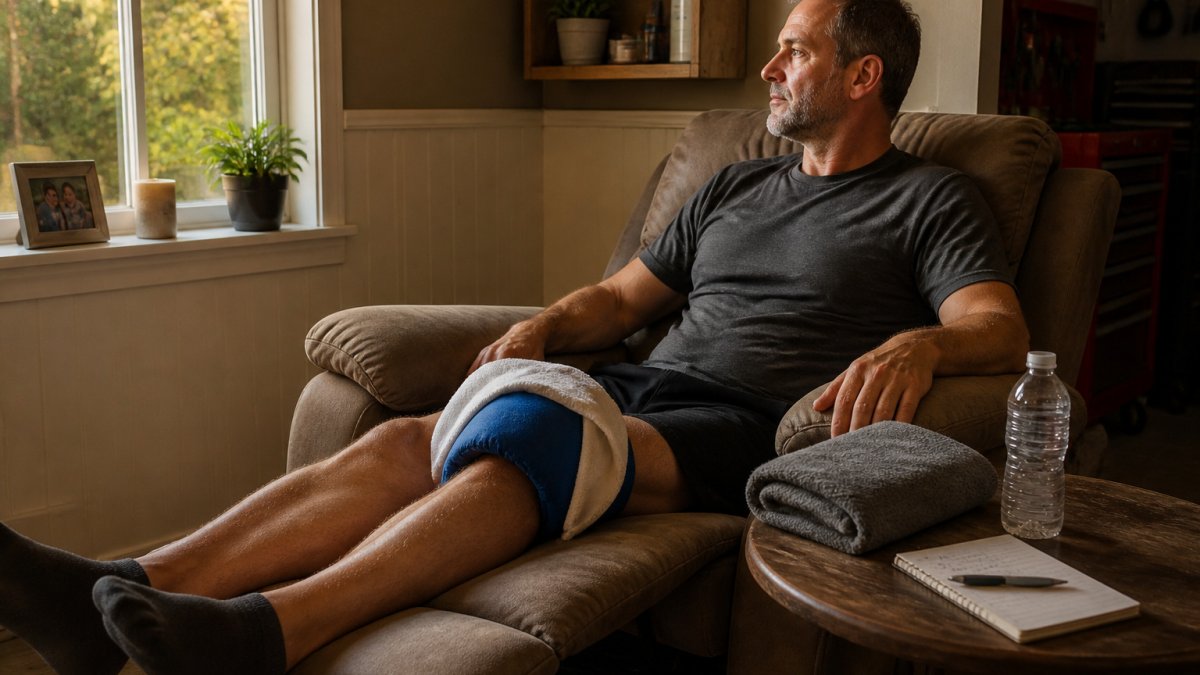
Set up a comfortable space before treatment day.
Good preparation includes:
- Stocking up on easy meals and snacks
- Keeping water, a phone charger, and remote controls within reach
- Setting out a cold pack and a clean towel
- Clearing walkways of rugs or clutter that could cause a fall
Ask someone to check on you during the first day or two to help with rides, meals, and reminders. Keep this guide and your clinic’s phone number handy. You can reach The Dynamic Care Clinic at 253-509-0424.
Stem Cell Therapy Recovery Time: A Day-by-Day Timeline
No single timeline fits every stem cell injection. Recovery depends on the body part treated, whether the procedure was a simple in-office injection or a more involved harvest-and-inject protocol, your age, conditioning, and underlying conditions such as diabetes or autoimmune disease.
Why the timeline shifts by body part
- Knee: Weight-bearing every step means soreness and swelling often linger longer. Most patients are advised to limit prolonged standing and stairs for the first 48 to 72 hours, then progress to flat-ground walking. Patients with musculoskeletal pain may also explore the clinic’s non-invasive StemWave shockwave therapy as a complementary option. Return to impact activity is typically the slowest of the common sites.
- Hip: Similar weight-bearing considerations, but sitting and driving can aggravate the site. Patients often need help with shoes, socks, and low chairs for the first few days.
- Shoulder: Often the most restrictive for sleep and dressing. Many patients are told to avoid reaching overhead and to sleep propped up for the first week. Return to desk work is usually faster than return to lifting.
- Spine or facet: Positional restrictions matter more than load. Bending, twisting, and prolonged sitting are usually limited first, and walking is encouraged early.
A practical day-by-day framework
Day 0 (treatment day):
- Rest for the remainder of the day. Do not plan to drive yourself home.
- Apply a cold pack to the injection site as directed, typically 15 to 20 minutes at a time with the pack wrapped in a thin towel.
- Avoid strenuous activity, heavy lifting, and any soaking of the site.
- Keep the site clean and dry per your dressing instructions.
Days 1 to 3:
- Expect soreness, mild swelling, warmth, or tenderness at the site. This is the peak window for most patients.
- Use ice intermittently in short sessions rather than continuously.
- Limit repetitive or high-impact movement and avoid prolonged positions that load the treated area.
- Take light daily tasks as tolerated. Short, gentle walks are often encouraged for lower-body sites unless told otherwise.
- Confirm with your clinician before taking any pain reliever, especially NSAIDs.
Days 4 to 7:
- Soreness often begins to ease, though a temporary flare after increased activity is common.
- Gradually increase walking and gentle range-of-motion movement within comfort.
- Ask your provider before resuming normal workouts, running, or overhead lifting.
- Most desk-based workers return to work in this window if their commute and seating can be managed.
Weeks 2 to 4:
- Many people return to regular work if their job is not physically demanding.
- Slowly build back into low-impact exercise such as walking, stationary cycling, or swimming once the site is cleared for immersion.
- Attend follow-up appointments as scheduled, when your clinician often reassesses swelling and range of motion.
Weeks 4 to 6:
For Appointments Call: 253-509-0424 →
- Progress toward your normal activity level with clearance from your provider.
- Begin or continue any rehabilitation plan your care team recommends; a physical therapist can grade the load better than a generic timeline can. For a deeper look at regenerative medicine recovery timelines, see this guide.
- Expect strength and endurance to lag behind pain relief. Feeling better is not the same as being ready for full load.
Weeks 6 and beyond:
- Continue graded return to sport or physically demanding work.
- Keep tracking symptoms. Some patients notice ongoing improvement for several months, while others plateau earlier. Neither pattern alone means the treatment failed.
What actually changes the timeline
- Procedure type: A same-day in-office injection usually has a shorter restriction window than a protocol that includes a harvest procedure, sedation, or a larger volume injected.
- Your baseline: Patients who were active before treatment often tolerate graded activity sooner, but they also tend to push too hard too early.
- Concurrent medications: Blood thinners, corticosteroids, and some anti-inflammatory drugs can affect bruising, swelling, and the treatment plan. Your clinician will tell you which to pause and when.
- Smoking and nicotine: Nicotine constricts blood vessels and can impair healing. Most clinicians advise stopping before and after treatment.
- Sleep and nutrition: Poor sleep and low protein intake slow recovery. This is not a guarantee, but it is a consistent pattern in post-procedure care.
Keep a simple recovery log
Note pain level on a 0-to-10 scale, swelling, range of motion, sleep quality, and any activity you added that day. Bring the log to your follow-up; it gives your clinician far more to work with than a vague memory and helps you spot a real trend instead of reacting to one rough day. Healing is not linear, so a single bad day does not necessarily mean something is wrong, but a worsening trend over several days is worth a call.
What to Avoid After Stem Cell Injections
Common things to avoid include:
- Heavy lifting or intense workouts too soon
- Repetitive stress on the treated joint or tendon
- Hot tubs, whirlpools, or soaking the site unless cleared
- Taking anti-inflammatory medications without checking first
- Smoking, which can affect circulation and healing
Warning Signs to Report and Booking Your Pre-Treatment Consultation
Most soreness, swelling, and warmth after a stem cell injection is expected and settles over the first several days. The harder question is which symptoms are part of normal recovery and which need a call or a visit. The framework below separates the two.
Expected vs. worth a call
| What you may notice | Usually expected | Call your clinician |
|---|---|---|
| Soreness at the site | Mild to moderate, eases with rest and ice over 2 to 5 days | Severe pain that worsens instead of improving, or pain uncontrolled by the plan your clinician gave you |
| Swelling | Mild, localized, peaks in the first 48 to 72 hours | Swelling that spreads, becomes hard and hot, or keeps increasing after day 3 to 4 |
| Redness | Small pink halo at the needle site | Spreading redness, streaking, or redness that expands beyond the site |
| Warmth | Slight warmth over the treated area | Hot, tender skin with fever or chills |
| Bruising | Small bruise at the injection point | Large, expanding bruise, especially if you take a blood thinner |
| Stiffness | Temporary loss of range of motion | New numbness, tingling, or weakness in the treated limb |
Symptoms that need prompt medical attention
- Fever of 100.4°F (38°C) or higher, or chills. Fever after an injection is not something to watch at home.
- Spreading redness, warmth, or pus at the injection site, or a red streak moving away from it.
- Severe or worsening pain that does not respond to rest, ice, or the pain plan your clinician approved.
- Numbness, tingling, or weakness in the treated area or the limb below it.
- Chest pain, shortness of breath, or a rapid heartbeat. These are emergency symptoms, call 911.
How to report a concern effectively
- Date and time of the injection and the exact site treated
- Your temperature, if you have one
- A description of the symptom: where it started, how fast it spread, and what makes it better or worse
- Every medication you have taken since the injection, including over-the-counter drugs and supplements
- Any new activity, travel, or injury since treatment
When to book your pre-treatment consultation
Ready to discuss your care? Call The Dynamic Care Clinic at 253-509-0424.
Frequently Asked Questions
How do you prepare for a stem cell injection?
Preparation usually starts with a consultation where your clinician reviews your full health history and current medications. You will typically be asked to tell the clinic about any blood thinners, anti-inflammatory medicines, supplements, or recent illnesses, since some of these may need to be paused under clinician direction. Arrange a ride home if sedation or local numbing is used, plan a few days of light activity, and write down questions before the appointment. Follow the specific pre-treatment instructions your clinic provides, because they vary by treatment type and body area.
How long does it take to recover from a stem cell injection?
Recovery time varies by injection site, the type of material used, and your overall health, so there is no single timeline that fits everyone. Many people report soreness, mild swelling, or tenderness at the site for several days, with more gradual improvement over the following weeks. Your clinician should give you a written timeline for your specific treatment, including when to resume normal activities and when to schedule a follow-up. If you are unsure whether your progress is typical, call the clinic rather than waiting.
Can you walk or exercise after a stem cell injection?
Light walking is often encouraged soon after treatment because gentle movement supports circulation, but the details depend on the treated area. High-impact exercise, heavy lifting, and repetitive strain on the treated joint or limb are usually restricted for a period. Ask your clinician when you can return to your usual exercise routine and which movements to avoid in the meantime. Follow those instructions rather than general online advice.
When should you contact a clinician after a stem cell injection?
Contact your clinician promptly if you notice fever, spreading redness or warmth at the injection site, drainage, severe or worsening pain that is not relieved by the measures you were given, numbness or weakness in the treated area, or shortness of breath or chest pain. These symptoms can signal complications that need prompt evaluation. In an emergency, call 911 rather than waiting for a callback.

Recent Comments